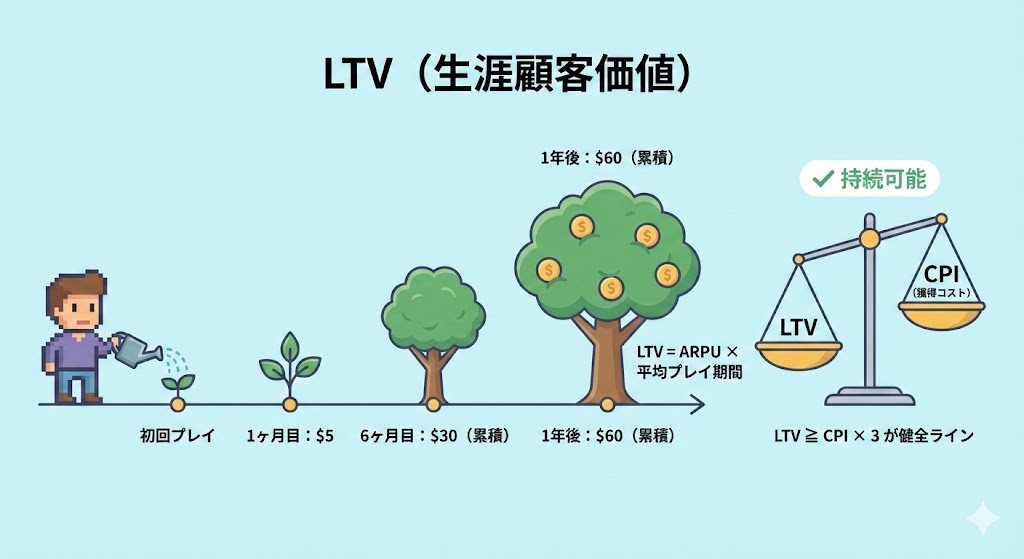


Why LTV matters
Marsh
LTV comes up in every marketing meeting. Why is it actually load-bearing?
Mallow
Because it sets the ceiling on what you can pay to acquire a user. If LTV is $5, paying more than $5 to get someone burns money. If you can buy them for $3, you're in profit. LTV > CAC is the floor for any ad spend. Without an LTV estimate, you're flying blind on budget.
Marsh
How do you compute it?
Mallow
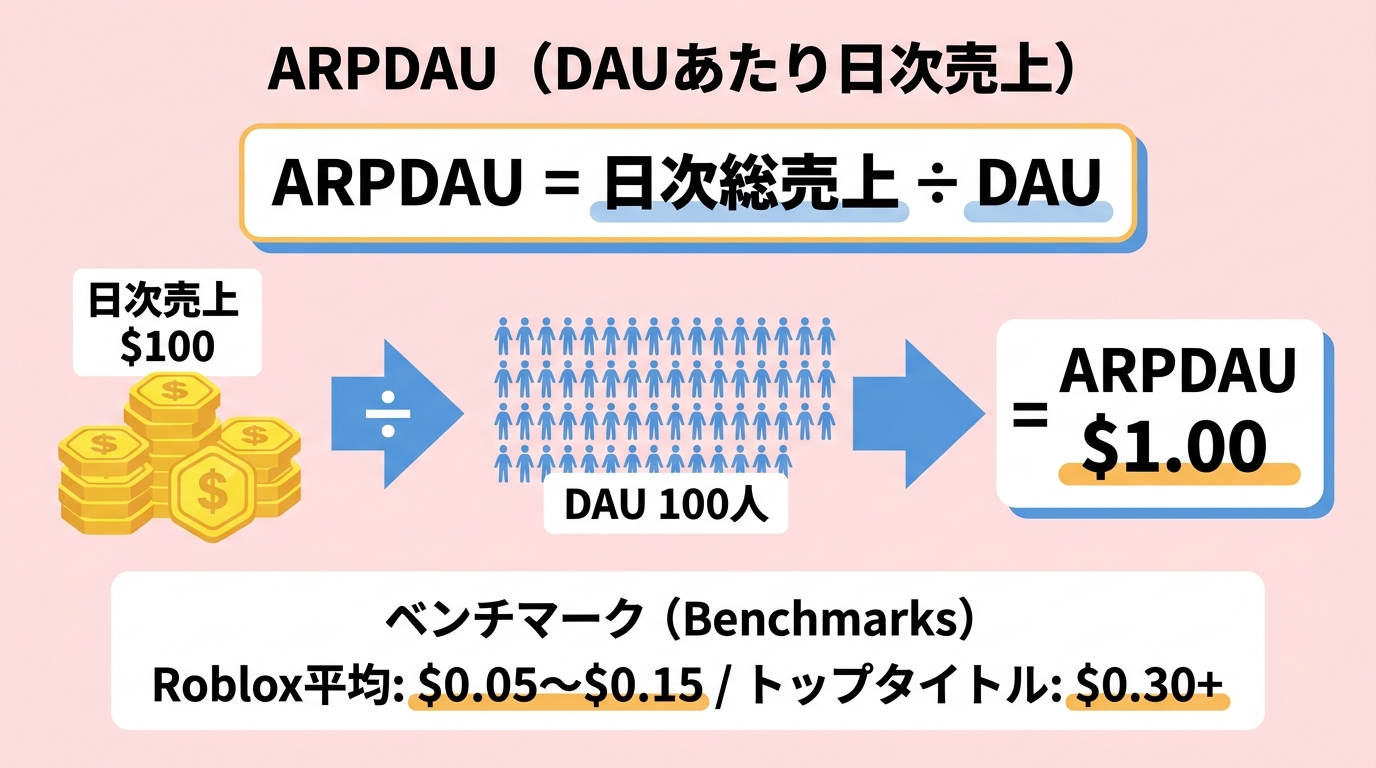
Simple form is ARPDAU × average lifetime in days. ARPDAU $0.10 × 30 days = LTV $3. The proper version time-integrates the retention curve, but the simple form is usually close enough for planning.
Marsh
Day one you don't have any data. What then?
Mallow
Use D30 cumulative revenue per user as the placeholder LTV. Once you actually have 30 days of data, that's a real anchored point. Then update with D60, D90 to sharpen. Predict first, correct with measurement — iterative budget.
Marsh
What's the typical LTV/CAC ratio people target?
Mallow
3:1 is the rule of thumb. LTV at 3× CAC covers operations, payback periods, and the margin for being wrong about your LTV prediction. 1:1 is breakeven on paper, loss-making in practice once you account for variance.
Formula & benchmarks
LTV (simple) = ARPDAU × Avg. lifetime in days
LTV (precise) = ∫₀∞ ARPDAU(t) × Retention(t) dt
LTV (precise) = ∫₀∞ ARPDAU(t) × Retention(t) dt
- Under $0.50: Casual / Obby — paid acquisition rarely viable without high virality
- $1–$3: Roblox median range across most genres
- $3–$10: Strong — Simulators, Tycoons, mid-core RPGs
- Over $10: Top tier — deep economy, season-pass models, top-30 chart titles
- LTV/CAC target: ≥ 3 for sustainable paid acquisition
Worked example
Marsh
Our ARPDAU is $0.10. Average lifetime is 30 days. So LTV is $3?
Mallow
Right. Simple form. So your CPI ceiling for paid acquisition is $3 to break even, or $1 to hit the 3:1 LTV/CAC target.
Marsh
Roblox ads quote us CPI around $0.40. So we're well under $1?
Mallow
At face value, yes — 7.5:1 LTV/CAC. But check two things. (1) Is the LTV based on organic users or paid users? Paid traffic often has lower retention and lower ARPDAU. (2) Did the $0.40 CPI hold at scale? CPI usually rises as spend grows. Test at small scale, measure paid-cohort LTV separately, then scale up only if math still works.
Marsh
If we improved D30 retention from 5% to 8%, how much would LTV move?
Mallow
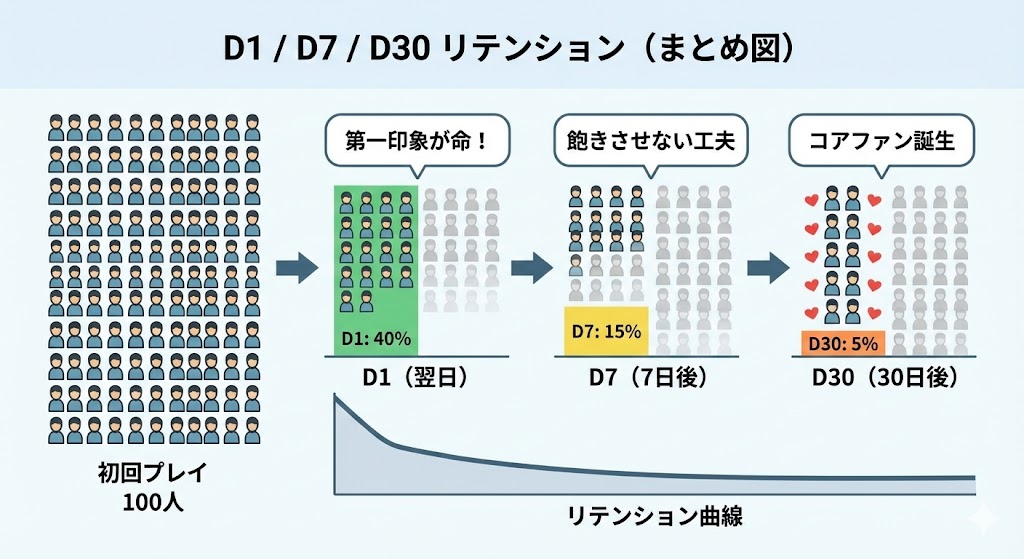
Roughly 60%, depending on curve shape. D30 lift fattens the tail, where most of the cumulative spend per cohort comes from. D30 is the highest-leverage retention input to LTV.
Reading it in Roblox
Creator Hub doesn’t show LTV directly. Compute from your own analytics: take a fixed cohort (say, all first-visit users from one week 90+ days ago), sum their lifetime Robux revenue, divide by cohort size. For predicted LTV on younger cohorts, use D30 cumulative revenue × an empirical multiplier (commonly 1.5–2.5×, calibrated against your own old cohorts). External tools handle the math but you still need to feed them the right cohort definitions. Always state LTV in USD on the developer-payout basis ($0.0035/R$) for budget conversations.
Common misconceptions
- "LTV is a single number for the game" is misleading: LTV varies hugely by acquisition source. Paid Discover Page traffic and Friend-Invite traffic have different LTVs. Always cut by source for budget decisions.
- "D30 cumulative revenue = LTV" undercounts: The tail past D30 is real revenue. Multiply by an empirical factor (or properly integrate the curve).
- Optimizing only LTV can starve growth: A title with $20 LTV but only 100 reachable users is worth less than a $3 LTV title with 10M reachable. LTV × addressable audience matters.
Related metrics
- CAC: Cost to acquire one user. LTV/CAC ≥ 3 is a common target ratio
- ARPDAU: An input to LTV
- Day 30 Retention: The base data for the lifetime estimate
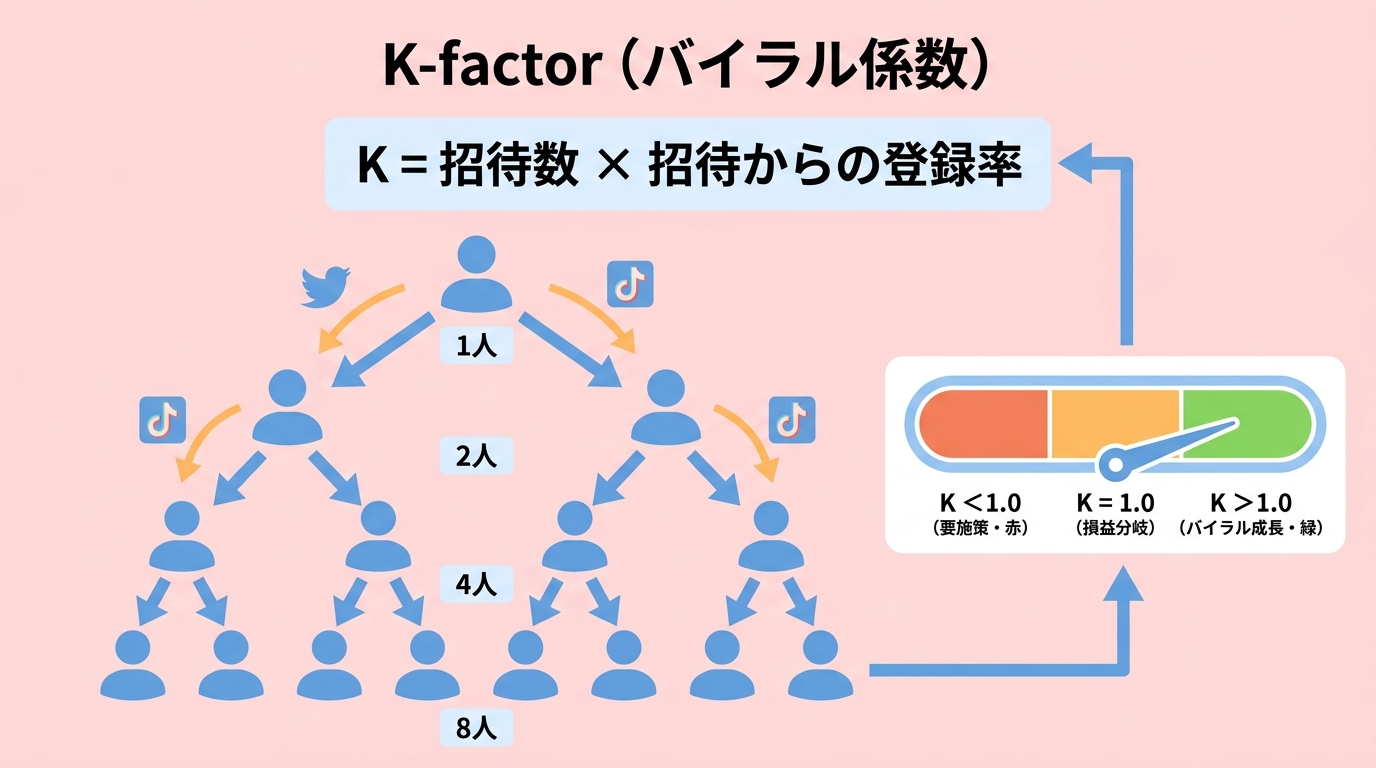
- K-factor: Lowers effective CAC, indirectly improving LTV/CAC
- Cohort Analysis: LTV is most reliably measured cohort-by-cohort