


Marsh
Mallow, I saw "Scoped User Identifiers" in the weekly recap. It sounds like a privacy feature. Does it affect how we identify our players?
Mallow
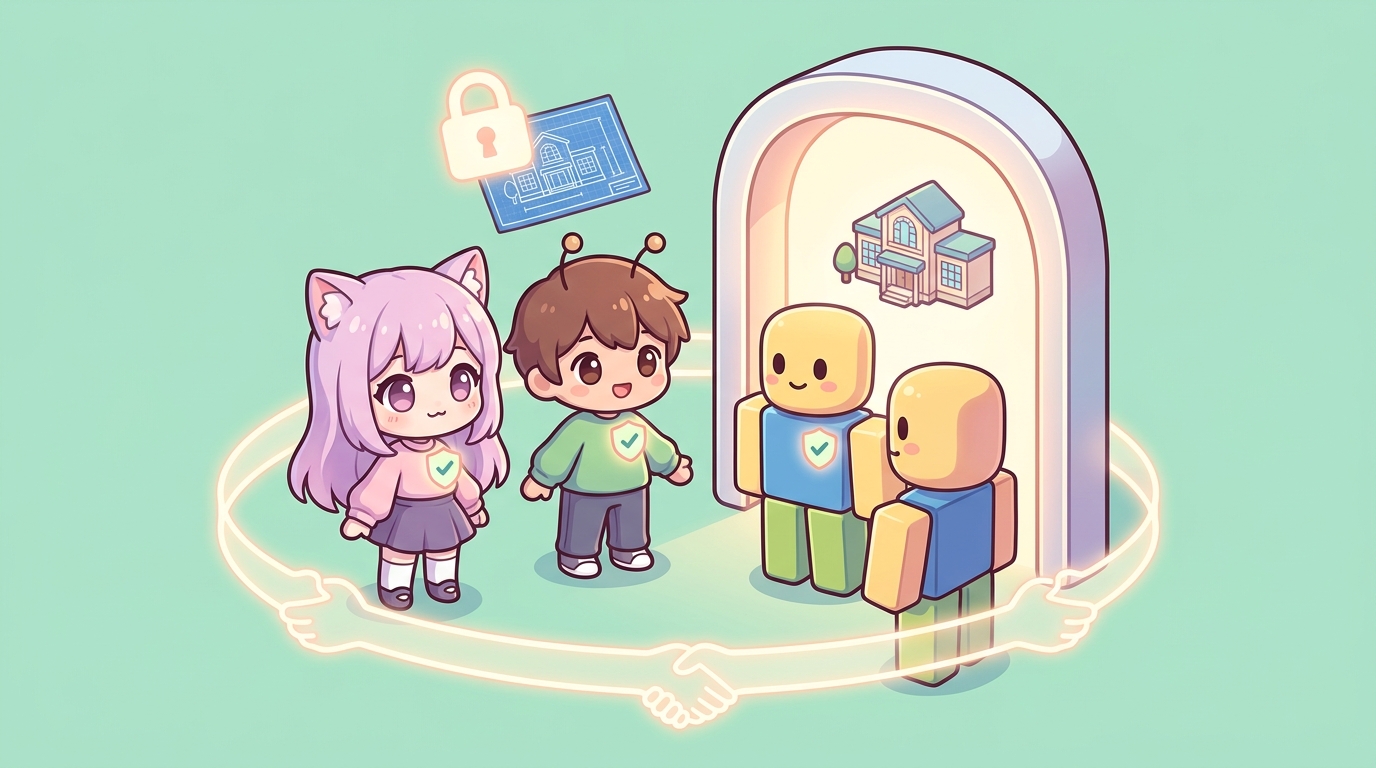
It does — quite a lot. Right now every player on Roblox has one global UserId that's the same in every experience. Roblox is introducing scoped (per-game) user IDs, so the same person gets a different ID in each experience. The goal is to stop players being tracked across unrelated games.
Marsh
Why does Roblox want to stop cross-game tracking?
Mallow
Privacy. A single global ID lets anyone correlate a player's behavior across totally separate games and build a profile of them. Scoping the ID per game means your game can still recognize a returning player within your game, but nobody can quietly stitch that identity to who they are elsewhere. It's the same privacy-maturation push as the age-based accounts and the economy-transparency moves.
Marsh
Does this break our existing player data? We store progress keyed on UserId.
Mallow
Here's the nuance that matters. The global UserId persists for returning players — anyone who has visited a game before keeps their global ID, and Open Cloud still supports it. Only new users get scoped IDs. So your existing DataStores keyed on UserId keep working for players you already have. But a brand-new player will arrive with a scoped ID, and a store built around the old global-ID assumption won't recognize them. You need a migration plan for new players.
Marsh
How do we read the new ID in code?
Mallow
There's a new
Player.User property. It returns a User object that carries the scoped user ID together with a domain type and domain ID — so the identity context always travels with the identifier. And engine APIs that used to take a numeric userId — like MarketplaceService:UserOwnsGamePassAsync — now accept either a number or a User. If you pass a number, it gets auto-wrapped into a User internally, so a lot of existing scripts keep running. Marsh
What's the timeline? When do we actually have to act?
Mallow
It's phased, so you have runway. Now: early testing in Studio —
Player.User is available to experiment with. Early July 2026: opt-in enrollment via a Configs API. August 2026: Open Cloud updates plus a User Account Linking API. October 2026: broader rollout to all games. The clock has started, but nothing forces a same-day scramble. Marsh
We run three games under our company, and we like knowing that a player in Game 1 also plays Game 2 — we use it for cross-promotion. Does scoping kill that?
Mallow
That's the key business question. By default, scoped IDs mean you can no longer silently link a player across your own titles. But Roblox is shipping that User Account Linking API in August precisely for this: it lets you resolve a player's identity across your games with the player's consent — the player is prompted to grant permission. So cross-promotion based on shared identity becomes consent-based, not automatic.
Marsh
And our analytics and the third-party CRM we feed UserId into?
Mallow
They'll receive scoped IDs for new players — game-specific only. Any external dashboard, attribution tool, or CRM that assumed a stable global UserId across games needs an integration update. Practical step: audit every place you currently export a UserId and ask "does this still mean what we think after October?"
Marsh
What about bans? We share a banlist across our games to block repeat offenders.
Mallow
Roblox says it's exploring Ban API enhancements and will roll them out before October to preserve shared-ban functionality across your games. The safe move is to keep your moderation inside Roblox's own ban system rather than a homegrown UserId blocklist — that way you inherit whatever they ship instead of maintaining something that breaks when IDs scope.
Marsh
Why should a marketer care about this, not just our engineers?
Mallow
Because it reshapes what you're allowed to know about your audience. Player-level identity, cross-title attribution, retargeting, lifetime-value tracking across your whole portfolio — all of it shifts from "automatic via the global ID" to "consent-based via Account Linking." If your measurement plan quietly assumes you can follow one person across every game you run, that assumption expires. Brief your data team now and design around consented identity.
Marsh
Executive summary?
Mallow
(1) Roblox is moving to per-game scoped user IDs to stop cross-game tracking; new users get scoped IDs, returning users keep their global UserId (still Open Cloud-supported). (2) Read identity via
Player.User (a User object with scoped ID + domain context); engine APIs accept numbers or User. (3) Timeline: testing now → opt-in July → Open Cloud + Account Linking August → broad rollout October 2026. (4) Action: plan a DataStore migration for new players, audit every external tool that uses UserId, move cross-title linking to the consent-based Account Linking API, and keep bans in Roblox's system. Marsh
So our players get more privacy, and we move from "tracking by default" to "linking with permission." More work for our data team — but honestly the right direction.